GVCivilization VII: what to play now, and what belongs to the 2027 roadmap | GameVerse
feature
Civilization VII: what to play now, and what belongs to the 2027 roadmap
The Earth map and new diplomacy options are here. The fourth Age is still ahead. Separating September's playable changes from Arc of Tomorrow and Earthrise.
By GameVerse Editorial7 minute read
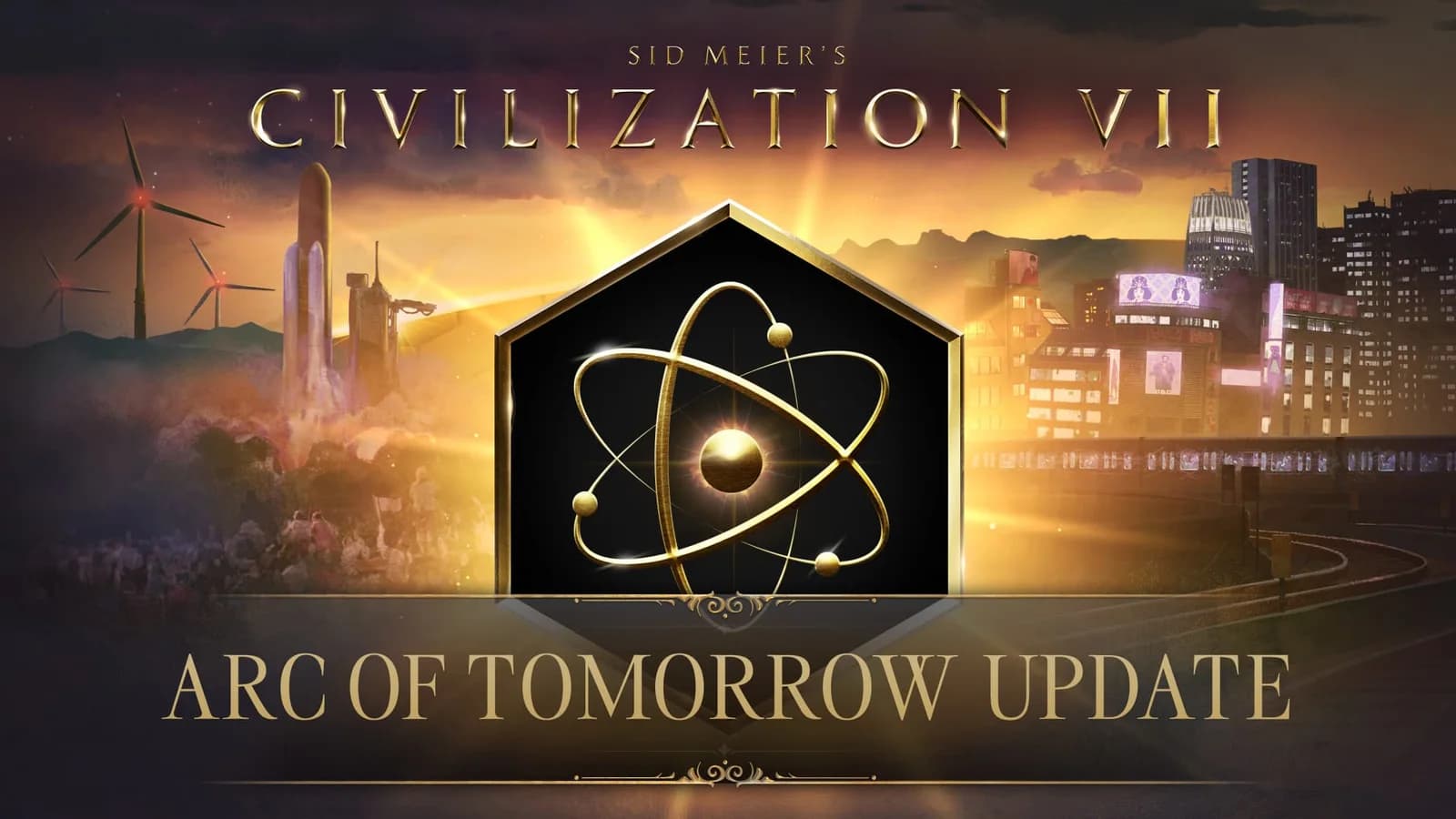
Arc of Tomorrow promotional artwork. The free fourth-Age update is planned for 2027; it is separate from the already released 1.5.0 update.Image: Firaxis Games / 2K
There are two quite different reasons to be curious about Civilization VII this autumn. One is a familiar coastline: a campaign starting on Earth, with an opening location tied to your chosen civilization. The other is the prospect of taking a campaign further into the twentieth century and beyond. They sit together in the announcements, but they are on different calendars.
Update 1.5.0 arrived on September 15. Hall of History, a paid content collection, launched alongside it. Arc of Tomorrow and the Earthrise expansion were announced for 2027. As of October 20, the question for a returning player is which of those things addresses the reason they stopped playing. An attractive roadmap can be worth following without making the present game the right choice for this weekend.
The current official update notes are the useful starting point. Read the release dates alongside the feature names; they prevent a new map, a paid roster addition and a future fourth Age from blurring into one imaginary update.
The Earth map changes the opening conversation
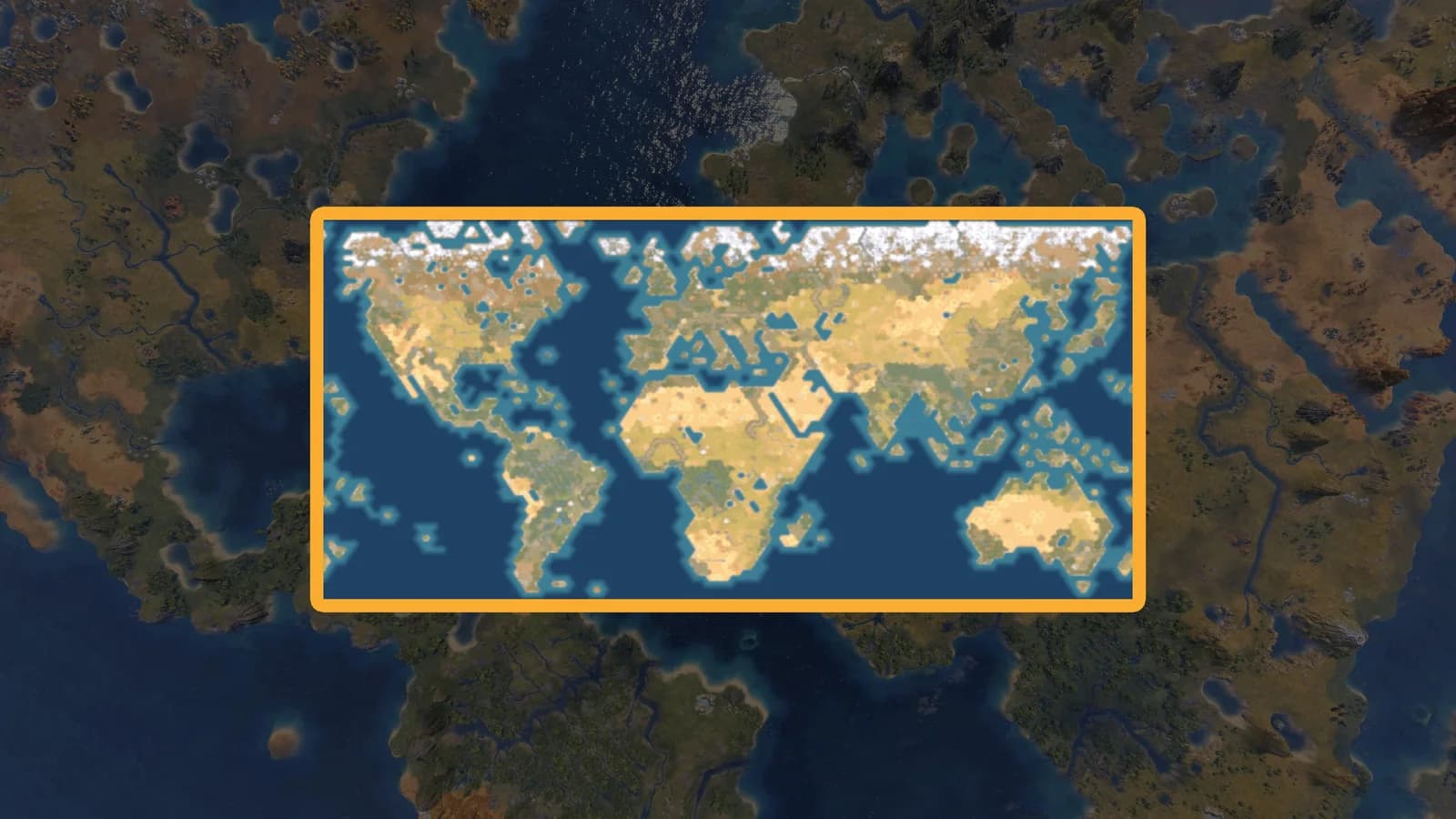
True Start Location Earth is a Huge map beginning in Antiquity. Your civilization starts near its historical capital. The map is supported on PC, Mac, PS5, Xbox Series X|S and Switch 2; it is unavailable on the original Switch, PS4 and Xbox One. A supported game edition therefore does not automatically imply access to this particular map.
Knowing the broad shape of a continent changes how you approach exploration. A coastline can suggest a direction before you have seen the next stretch of it. A narrow connection between landmasses can become an objective in your mind before the first argument over territory. The appeal is partly that you bring geographical knowledge to the game, then discover how much that knowledge helps in the actual campaign.
It also creates a temptation to play the map you remember instead of the one in front of you. The official September recap explains that this is an adapted Earth: some regions are enlarged, empty space is trimmed, and Natural Wonders vary between games. Real geography provides the theme. Tile positions and current neighbours still decide the next move.
Firaxis's Earth-map overview makes the familiar outline easy to recognise. The playable map adapts geography for a Huge-scale Antiquity start; platform support is listed above.
For a group choosing its next campaign, that distinction is useful. Choose Earth if the shared premise sounds entertaining: everyone recognises the world and gets to argue about its future. Choose a less familiar map if discovering the shape of the world is the evening's attraction. Neither choice needs to serve as a verdict on which mode is more serious.
Staying neutral now has a price
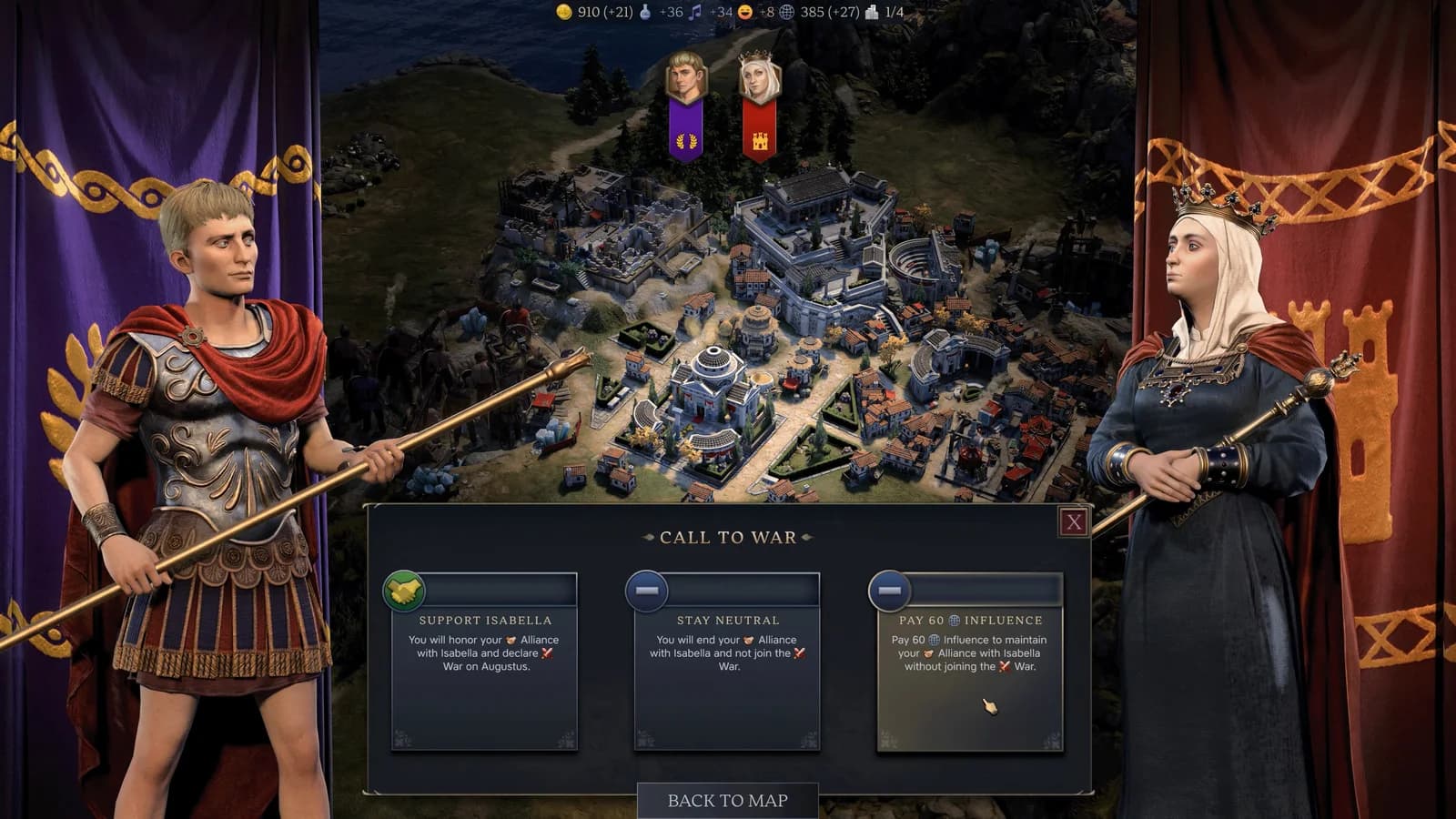
One of 1.5.0's diplomatic additions lets you pay Influence to an ally to avoid joining their war while preserving the alliance. On Standard speed, the decision returns every ten turns. It does not apply when two of your allies fight each other. That recurring payment, rather than a permanent opt-out, is the important detail.
Imagine you are building toward a domestic objective when an ally asks for military support. Joining can interrupt production and expose territory; refusing may cost a relationship you intended to keep. A paid neutral response creates another possibility, but it also makes the length of the war relevant. A payment that seems manageable once can feel different when the demand returns.
The official 1.5.0 screenshot shows the three responses. Its displayed Influence price belongs to this example; a recurring payment still needs to fit your own campaign.Image: Firaxis Games / 2K
Before choosing, think about what you want the alliance to preserve. Is the relationship helping protect an exposed border, supporting a broader diplomatic arrangement, or merely surviving because you have not reconsidered it? Those are different reasons to pay. There is no universal Influence threshold that answers them, and the amount in a promotional screenshot should not become a budget rule for every campaign.
The feature is interesting because it turns an interruption into a negotiation. You can prefer peace and still have a reason to care about your ally's war. Whether that produces satisfying choices over a whole campaign is something the playable system has to demonstrate; the existence of an extra button alone does not settle it.
Hall of History is a separate purchase decision
Hall of History adds Elizabeth I and George Washington, plus Babylon, Gauls and England. It is paid content, distinct from the base game's free update. The collection's release is a reason to look at a particular leader or civilization, rather than an instruction to buy everything before returning.
For someone considering the pack, the most useful preview is a specific campaign idea. Which addition would you actually select, and what do you want to do with it? Read that entry's official game guide, then imagine the opening and the kind of map you would enjoy. A familiar historical name can be a good invitation, but it does not by itself explain what the game asks you to do.
There is no need to make the map test and the roster purchase the same decision. You can first find out whether the current game interests you. If it does, a new campaign built around a chosen addition has a clearer purpose than buying a collection because its release happened beside the patch.
Arc of Tomorrow adds a fourth Age in 2027
2K's September 5 announcement describes Arc of Tomorrow as a free update for base-game owners, planned for 2027. Its Atomic Age extends the timeline roughly from the 1950s to the 2050s. Announced ideas include expanded nuclear play, new empire-management tools and period-specific content. These are future plans, not features hidden somewhere in 1.5.0's settings.
A fourth Age raises a question beyond the amount of content: what does an empire still need to decide near the end? More turns can create room for a reversal, a new rivalry or a policy that finally pays off. They can also make an already settled campaign take longer. The useful test will be whether the additional era gives a player meaningful reasons to reconsider their position.
That is why the late campaign matters more here than a count of new units. If your concern was the shape or pacing of the ending, the Atomic Age is the relevant project to follow. A different starting map cannot answer that concern, even if the map itself is appealing. Waiting for fuller details is a reasonable response to a feature still in development.
Earthrise has a different job from the free update
Earthrise is the first paid expansion, also planned for 2027. Its announcement connects early observation of the sky with later solar-system missions and environmental adaptation on Earth. The free update extends the timeline; the expansion proposes additional activities across it. Neither has a precise release date in the cited announcement.
The developers' September questions and answers help define the scope. They describe space exploration through a node-based solar-system chart. Planetary cities and buildings placed hex by hex sit outside that announced design. That is a valuable clarification for anyone imagining a direct successor to Beyond Earth's planetary settlement.
The interesting possibility is a relationship between exploration and the empire you already govern. A mission can be exciting because of what it might discover, while its funding competes with needs at home. Whether the eventual design makes those decisions compelling remains open. The announced subject is enough to be curious about without supplying an imaginary finished ruleset.
Check the installed game before choosing a campaign
The official notes also list a September 30 hotfix covering stability and resource-generation issues. Their updated platform note now says that hotfix is live on Switch and Switch 2 as well. Someone reading an older announcement may still encounter the earlier message that Nintendo rollout was pending.
If you return now, start with the part you can actually try: the map, the diplomatic choice, or a particular leader you own. If your interest depends on the fourth Age or space missions, keep the 2027 projects on your watch list. It is easier to judge the game fairly when this weekend's campaign does not have to deliver next year's announcement.