guide
Helldivers 2: get the squad home before chasing another fight
A practical squad guide to clear lanes of fire, useful calls, moving between objectives, and an extraction plan that survives the first mistake.

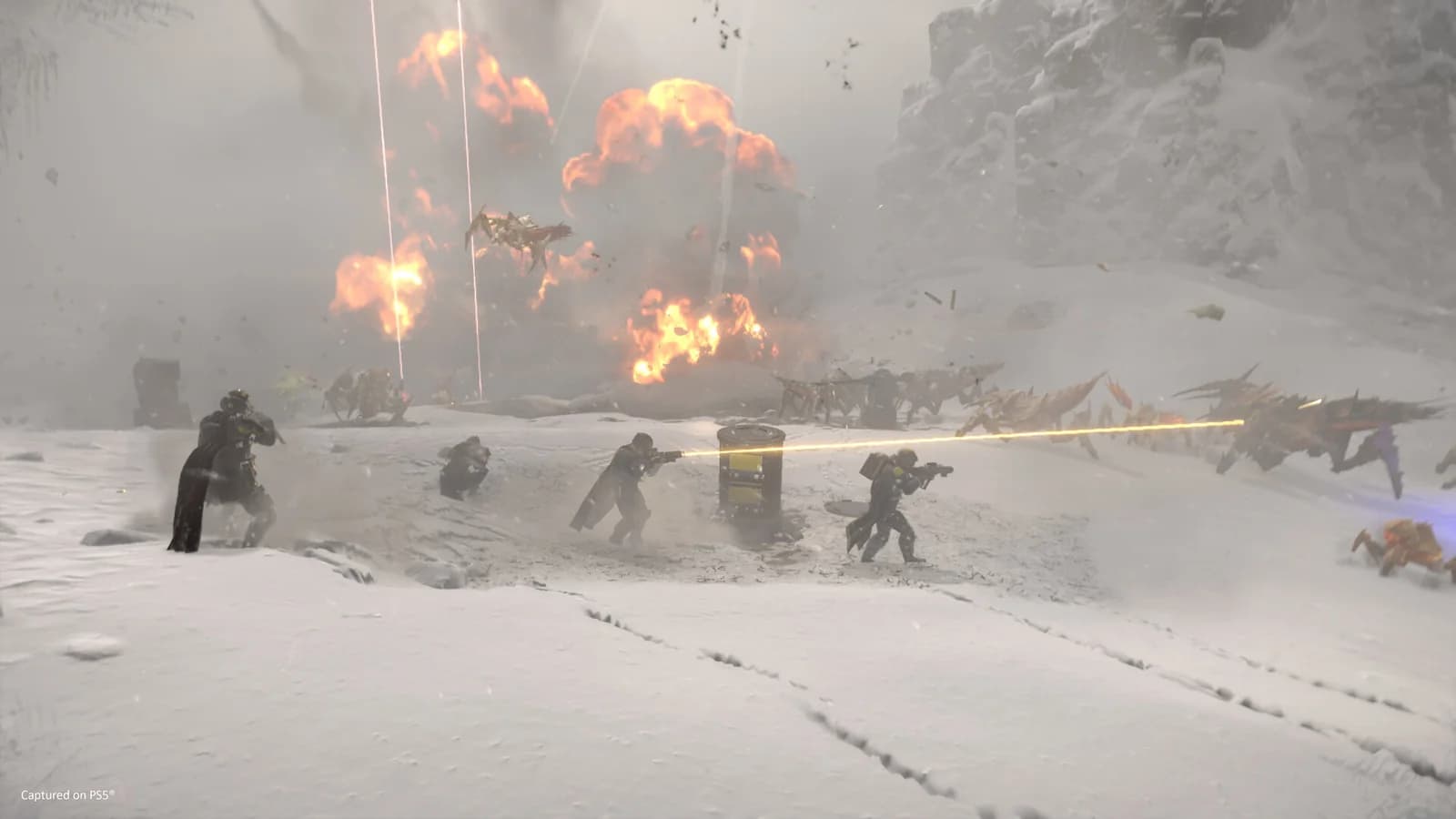
The argument usually begins beside something that is already exploding. One diver wants to finish a side objective, another has spotted supplies, and the player carrying the most samples has quietly started toward extraction. Nobody is making a ridiculous decision. The problem is that the squad now has three plans and no spare time to compare them.
Helldivers 2 makes that confusion expensive. Friendly fire is always on, support weapons need space, and every extra fight asks something of your ammunition and reinforcements. A successful squad does not need perfect aim from every player. It needs a shared idea of what happens next, plus enough room for someone to make a mistake without taking the rest of the mission with them.
Set the route while it is still quiet
Before landing, look at the mission and choose a first destination. Agree whether you are clearing the main objective quickly or taking a slower route through optional tasks. If a friend is learning the controls, say so before choosing the difficulty. A level that lets them read a terminal and try a stratagem is a better classroom than a level where the squad has to rescue them every thirty seconds.
Keep the first plan short. “Main objective, nearby samples, then extraction” is enough. You can revise it when the situation changes. A complicated route drawn before seeing the ground often becomes another thing nobody remembers once the shooting starts.
Equipment choices should cover different needs rather than fill four identical wish lists. Ask who can handle a heavy threat, who has support for a crowd, and whether the team understands the dangerous areas of each chosen strike. This is about covering gaps, not assigning rigid classes. A player still needs to help with ordinary enemies when their impressive equipment is cooling down.
Call the danger, not your entire thought process
An effective call gives somebody a place and an action. “Strike on the nest; move left” is useful. “I think maybe we should do something about all these enemies” arrives too late and leaves the decision with everyone else. Use a ping when a landmark is hard to describe.
Warn teammates before putting a beacon near them. Give the attack room to land and remember that a teammate backing away from one threat may walk into another. Sentries deserve the same care: place one where it can cover an approach without sweeping across the position the squad needs to occupy.
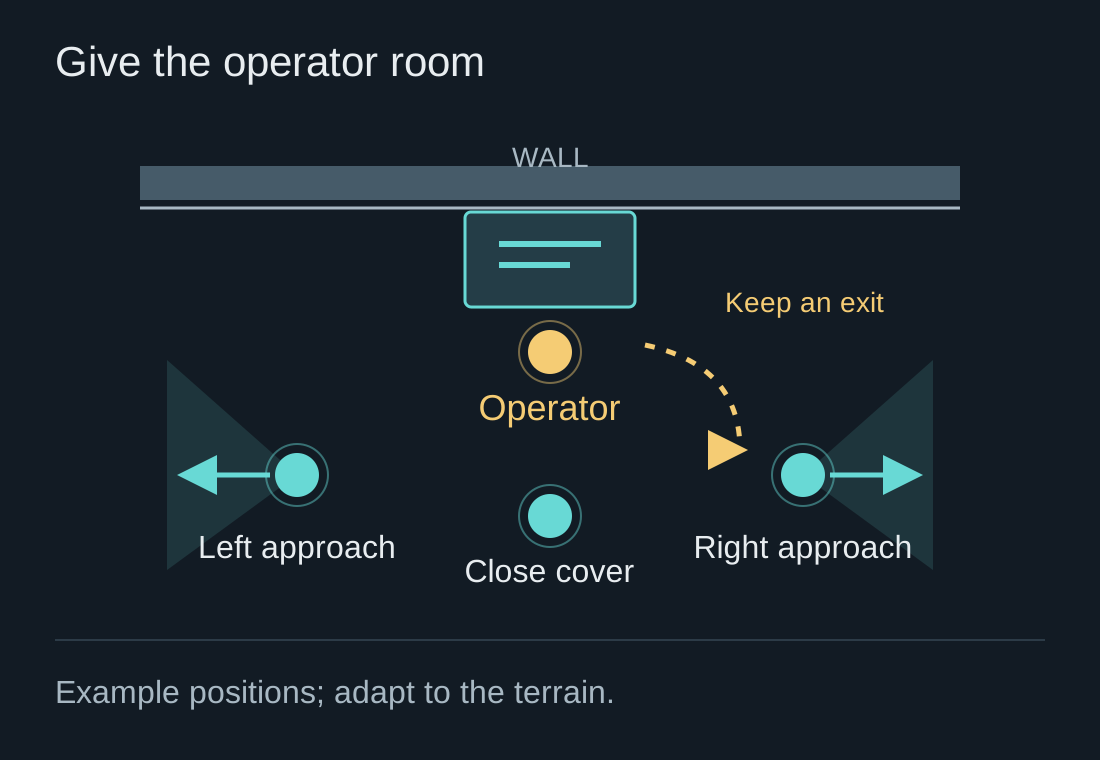
You also owe the team a call when changing position. Crossing in front of somebody who is already firing turns an ordinary reposition into a friendly-fire accident. Move behind their lane where possible. If you cannot, stop the fire or call the crossing. The small pause costs less than replacing a diver and recovering equipment in the same dangerous spot.