guide
Sea of Thieves: the small jobs that make a first voyage work
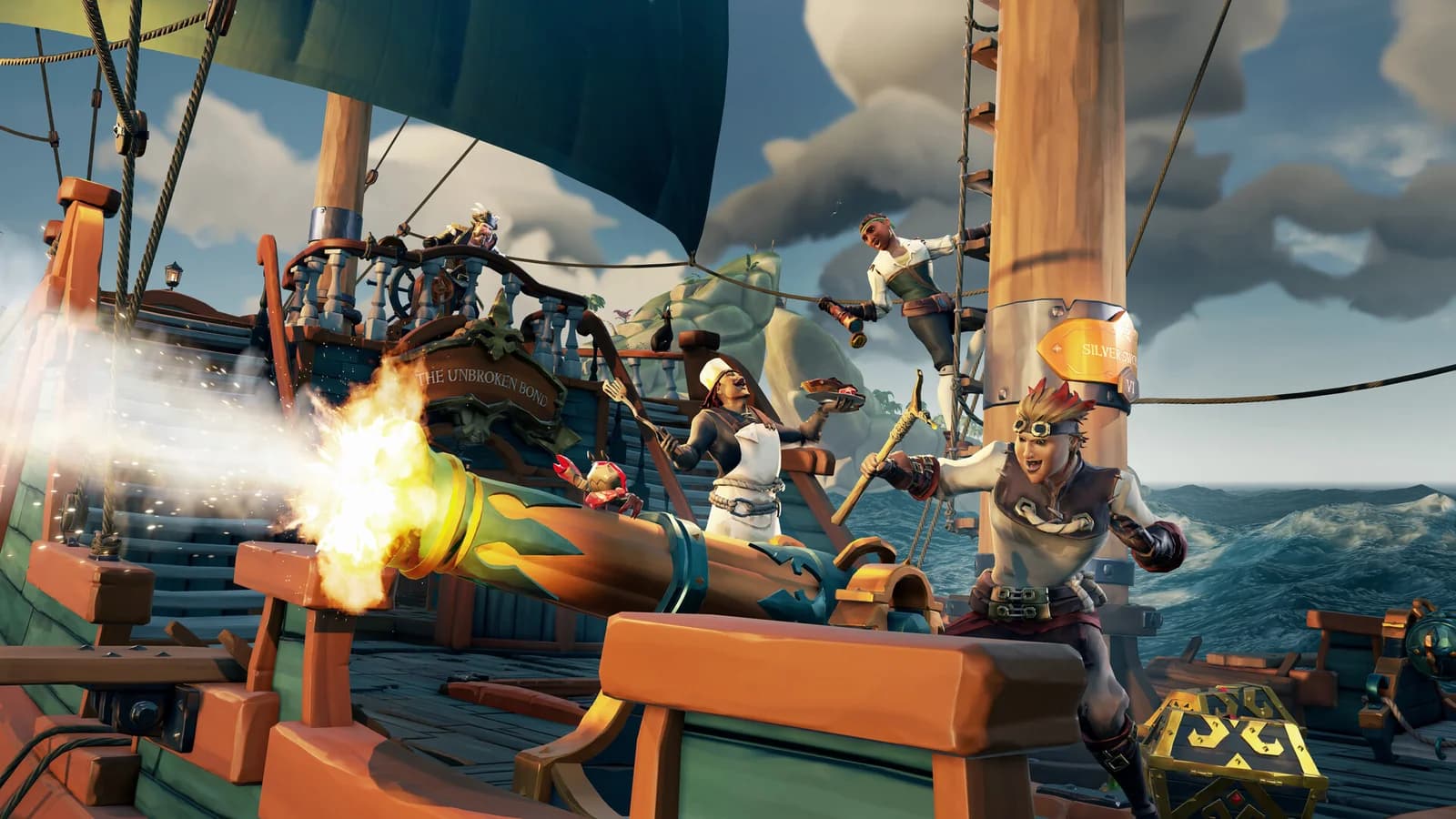
A helm needs a lookout, a cannon needs someone keeping the ship afloat, and treasure needs a return trip. Give the crew a simple plan before lowering the sails.
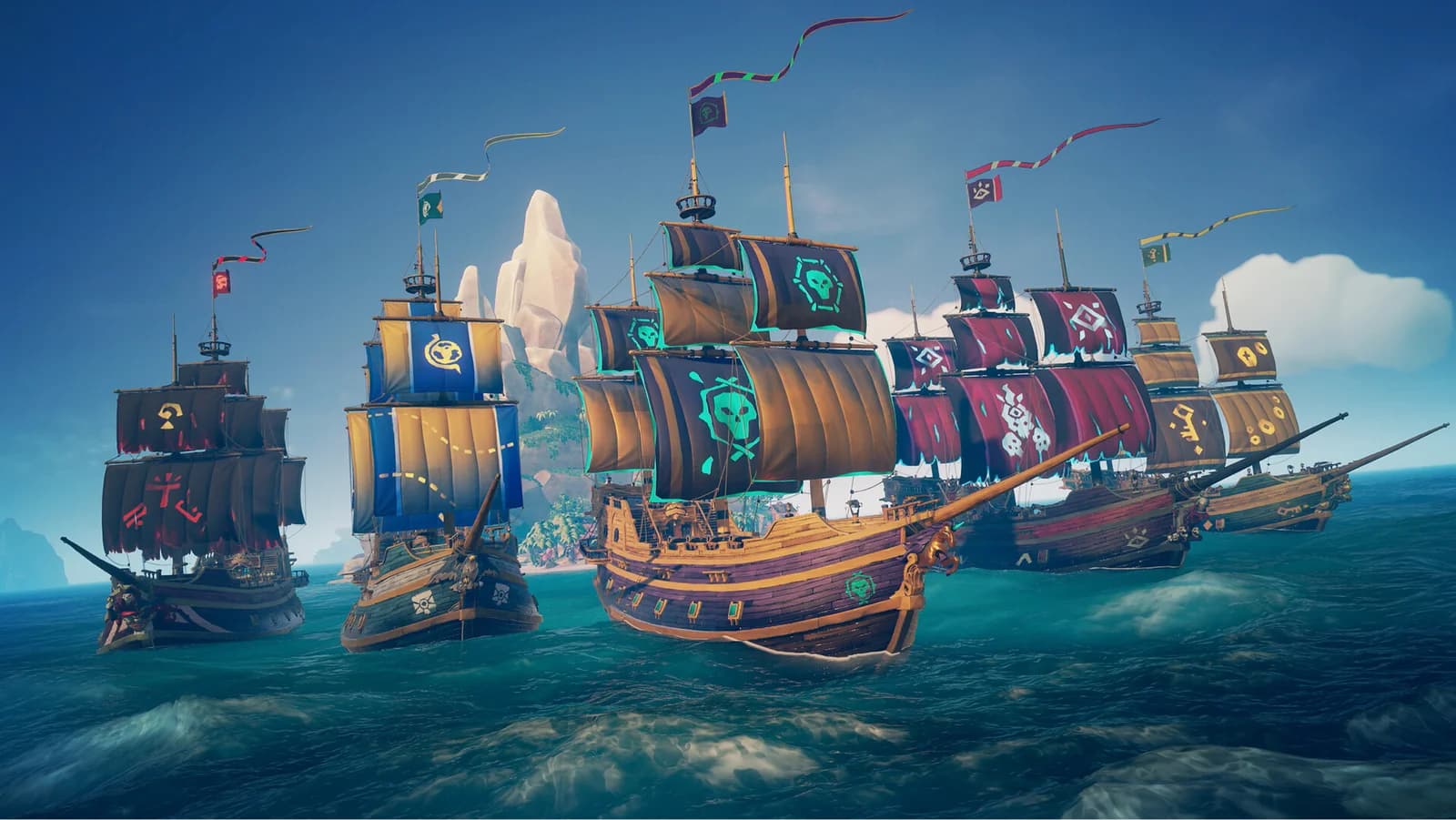
The first difficult maneuver in Sea of Thieves may happen before you meet another ship. An island is getting larger, the wheel is turned hard, and someone has just announced that the map is on the deck below. Everyone is trying to help. Unfortunately, nobody is reducing the sails, so the helpful ship is still travelling directly toward the helpful island.
That is the charm and the problem of a shared vessel: several ordinary tasks happen in different places. You can learn them quickly, but only if the crew has room to practice. Choose a modest first voyage and treat the journey home as part of the objective. Treasure on the deck is still cargo you can lose.
Pick the sea your crew wants to sail
Start by agreeing how much uncertainty you want from other players. High Seas includes encounters with other crews. Safer Seas gives a more controlled setting for learning or quieter adventures, with some features differing from the shared mode. Check the current mode description for any activity your group specifically wants to try.
For a small crew, a sloop keeps the basic jobs close enough to understand. Larger ships support larger crews but also make coordination more demanding. Do not take the biggest vessel simply because it looks impressive. The sensible ship is the one your group can operate while somebody is reading a map or dealing with a leak.
Run through the Maiden Voyage if you are new. Then find the helm, sails, anchor, cannons, supply barrels, and map table on the actual vessel you will use. Knowing where the planks live matters more during a leak than knowing the proper nautical word for every part of the hull.
Leave shore with something to eat and something to repair
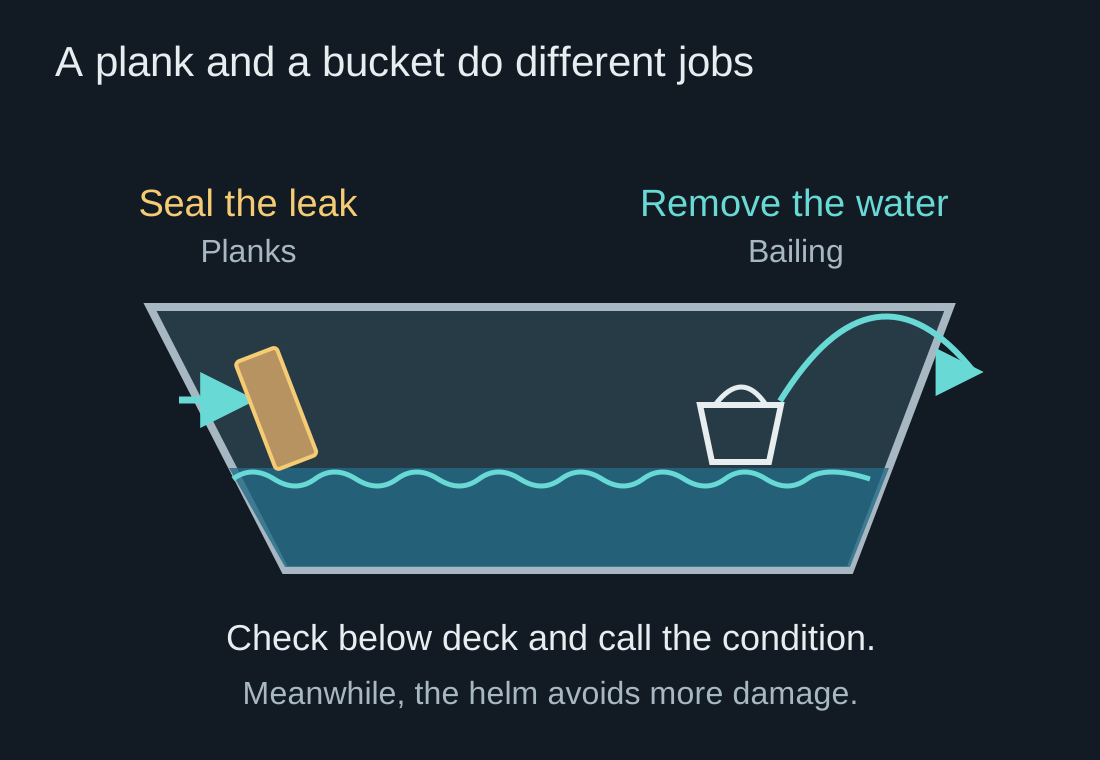
Gather food, cannonballs, and wooden planks before sailing. Check the ship's barrels together so everyone knows what is available. If one player carries all the useful supplies, the rest of the crew may discover that only after the player is busy elsewhere.
Choose a nearby destination and mark it on the map. The player at the wheel needs directions that can be acted on: an approximate heading, a landmark, and a warning when it is time to slow down. “It's over there” does not help when the sails block part of the view.
Give the first route a manageable scope. One destination, one task ashore, and one return makes it possible to learn what a complete voyage involves. A long chain of stops builds up cargo and fatigue before the group knows how comfortably it can handle either.
The helm should not have to guess
Assign one person to steer and another to watch ahead and work the sails. These are temporary responsibilities, not ranks. On a larger crew, somebody can check the map and another can watch the horizon while still helping when a sail needs moving.