GVStardew Valley: plan a first spring with room for the town | GameVerse
guide
Stardew Valley: plan a first spring with room for the town
Keep the crop plot manageable, check growth times before buying seeds, and choose one afternoon project so farm chores leave room for the rest of the valley.
By GameVerse GuidesUpdated 5 minute read
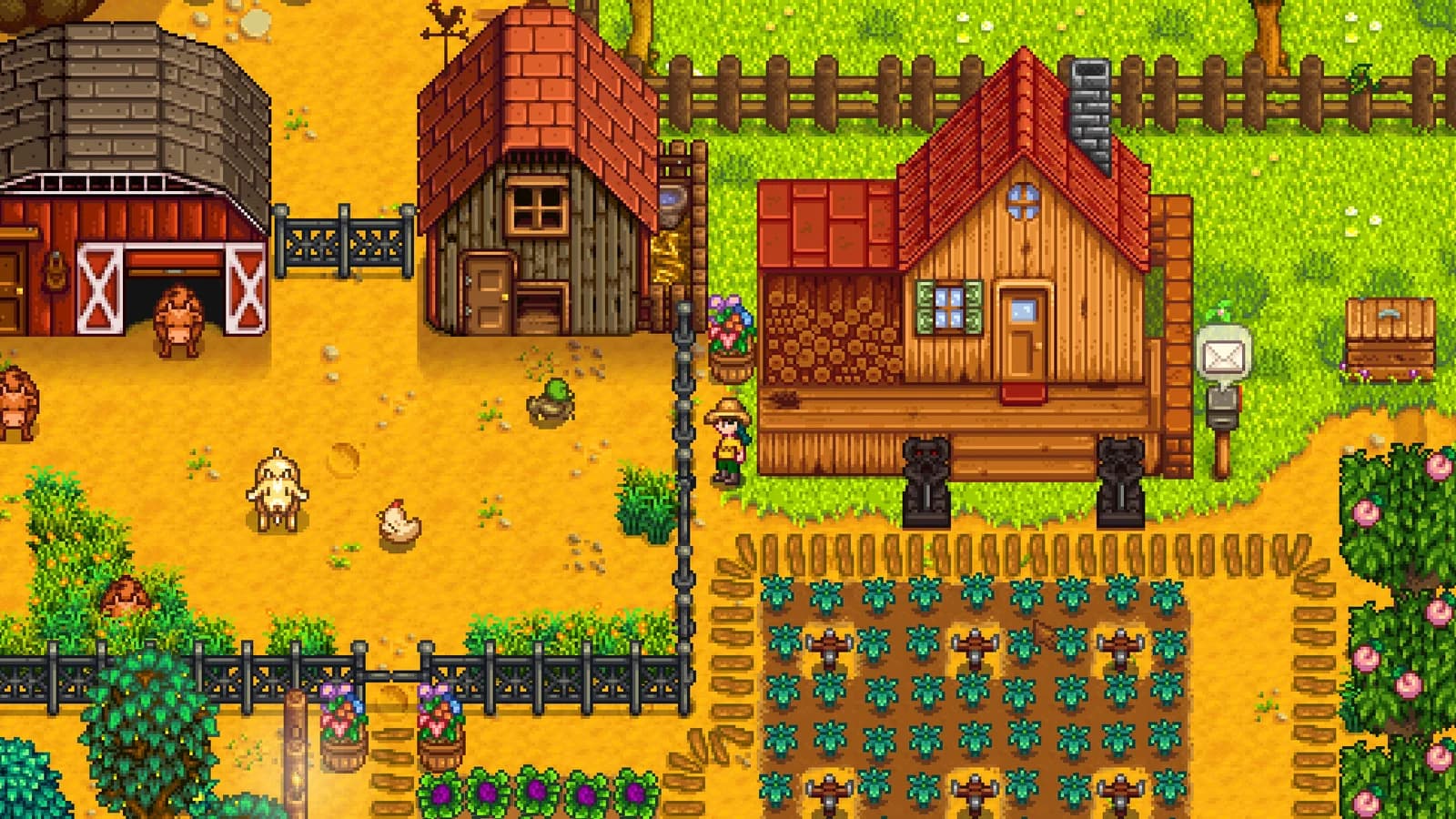
Crops, animals and buildings share the same farm. Leave space for paths before adding the next project.Image: ConcernedApe, via Steam
A large crop plot looks productive on the first morning. A few mornings later, watering it can occupy the time and energy you wanted to spend fishing, exploring, or meeting people. Stardew Valley gives you several good uses for a day. The first spring works better when the farm's routine leaves room to try them, rather than expanding faster than your tools and attention can support.
Begin with a plot you can manage comfortably, some predictable storage, and one afternoon objective. You can increase production when you know what the extra work will cost. The early farm does not need to become a finished business before you have seen the town.
Treat seeds as a commitment to future mornings
The seed price is only one cost. Planting also commits you to preparing soil, watering, and waiting through the crop's growth time. Before buying more, look at how long the current chores take and how much energy remains afterward.
Expand by an amount you can test. If a few extra tiles leave the routine comfortable, keep them. If they consume the afternoon, pause expansion and spend time improving the tools or layout. A farm that you maintain reliably can be more enjoyable than a larger one whose work you resent.
Leave clear paths and avoid placing a chest where you have to move around it repeatedly. Simple organization saves little bits of effort throughout the day. Put frequently used items somewhere you can reach without making an unnecessary trip across the farm.
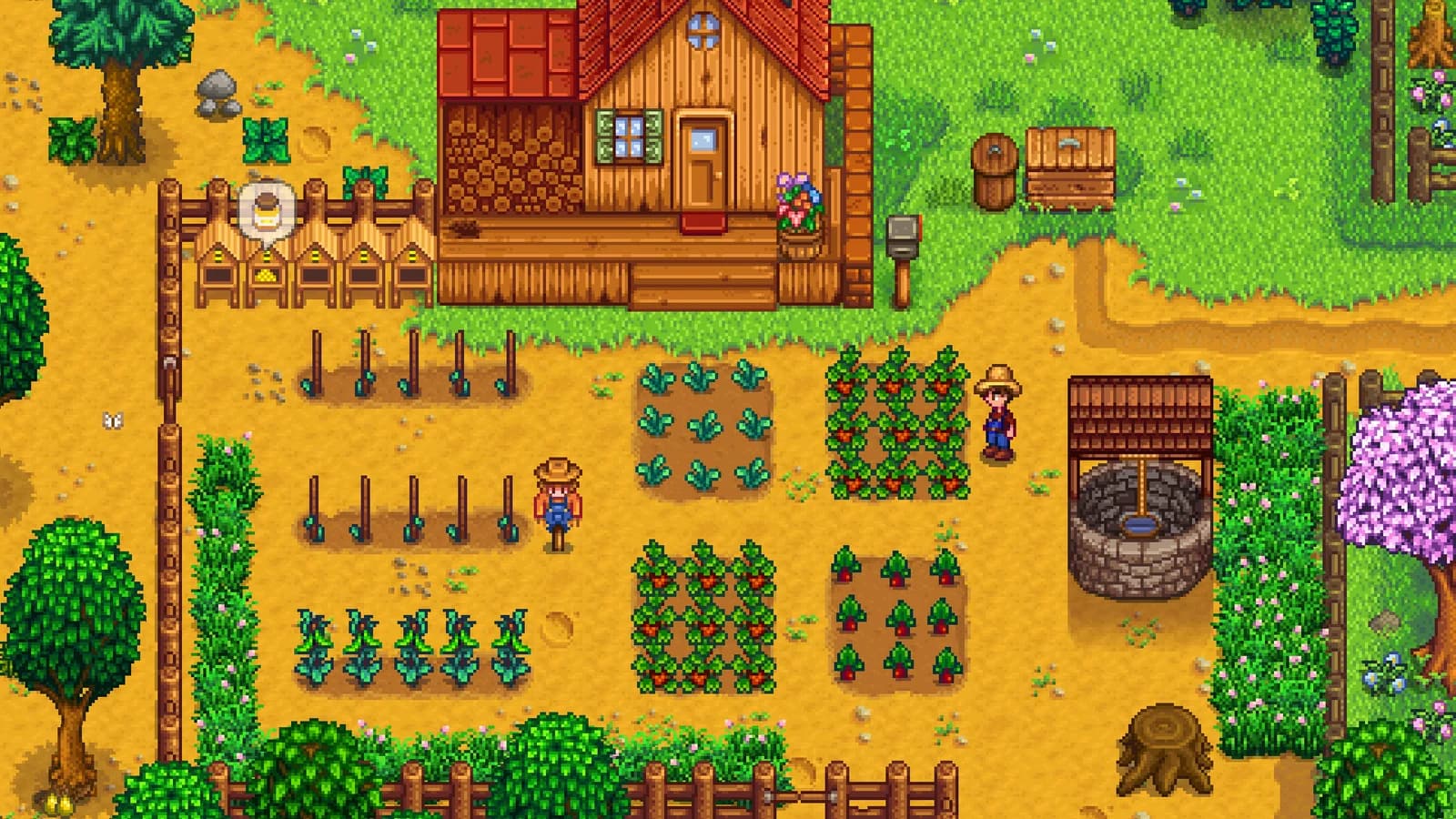
Separate plots and open routes make it easier to reach crops and storage. This developed farm is a layout example, rather than a first-day shopping list or a target for your first spring.Image: ConcernedApe, via Steam
Check the calendar before buying late-season seeds
Read the number of days a crop needs and compare it with the time left in the season. Most crops have a limited season, so an attractive seed purchase can become a wasted planting if the harvest arrives too late. Leave yourself a little margin rather than assuming every remaining day will go exactly to plan.
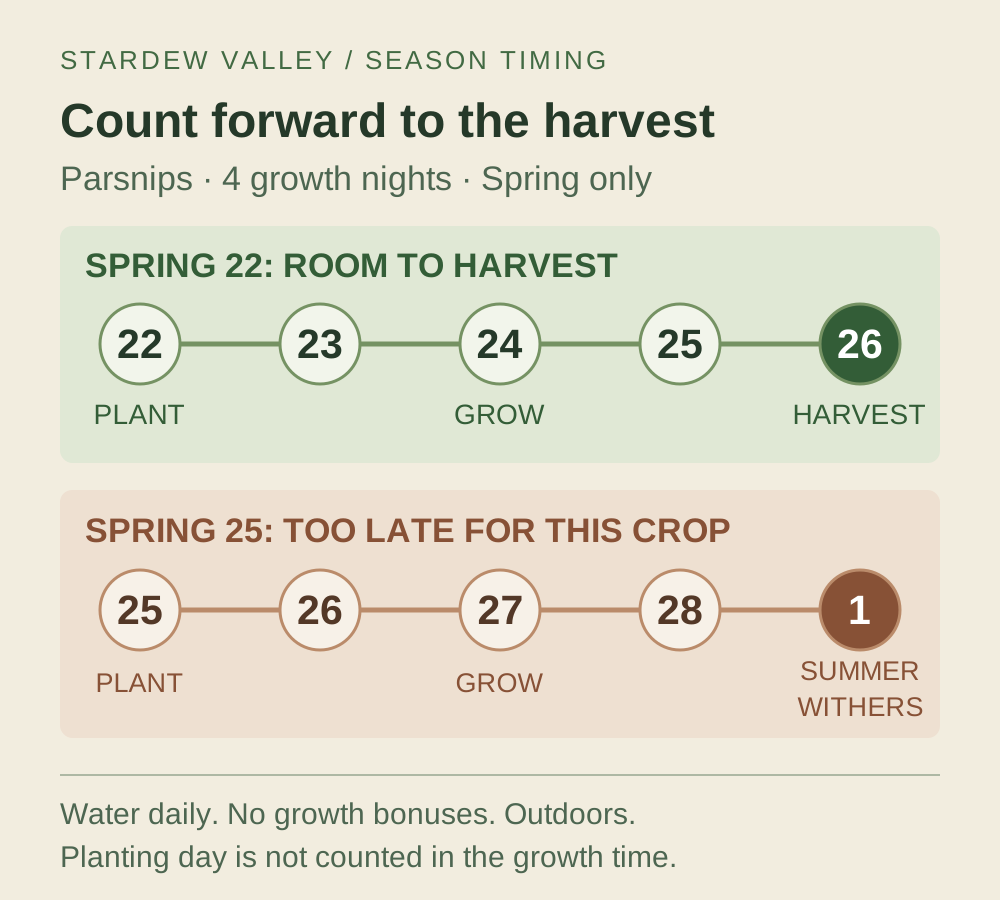
Worked example for outdoor parsnips: four growth nights, watered every day, without growth bonuses. Spring 22 leaves a harvest on Spring 26; Spring 25 runs into the season change. Multi-season crops need a separate check.Image: GameVerse explanatory illustration
Regrowing crops and crops that span seasons need their own reading. Check the seed description and available information before treating them like a single harvest. The useful habit is to work forward from the planting date, not backward from a profit list.
Toward the end of spring, review what you want ready for summer. A tidy field, spare resources, and some money for the next round of seeds are practical goals. You do not need to fill every empty tile on the final days merely because it is available.
Choose one afternoon job
After the morning work, pick a main activity. Fish at a place you want to learn, visit residents, gather materials, or explore the mines when they become available. A clear objective keeps you from spending the afternoon walking between several unfinished ideas.
Make the job modest at first. Learn a fishing rhythm, reach a useful point in the mines, or speak to a few people along one route. As you become familiar with travel times and the tools involved, you can combine activities more efficiently.
Carry only what supports the trip, with room for what you expect to collect. Inventory pressure can force an awkward decision halfway through a useful outing. Keeping farm supplies in a chest also reduces the chance of selling or discarding something you meant to reserve.
Keep a small reserve before selling everything
Money matters early, but so do materials for the next project. Decide what you are saving for and keep a sensible supply of its requirements. A chest can turn an uncertain future need into an organized reserve, rather than leaving every resource in the backpack.
When the community projects become available, read their requirements before committing items. Keeping one example of something unfamiliar can help if you later discover a use for it. You can review the reserve and sell surplus once the immediate projects are clearer.
Avoid saving absolutely everything indefinitely. The purpose is to support decisions, not create a storage problem of its own. Give the chest a few categories you understand, and check it before buying or collecting materials you may already have.
Leave energy and travel time for the way home
Watch your energy while using tools and your remaining time while away from the farm. A trip that succeeds at its main objective still needs a return journey. Learn the route home before testing how late you can stay out.
Food can be useful, but read what an item provides before eating it. Keep an option for an outing that you expect to require repeated tool use. On a quieter day, use the available time to organize, talk to people, or plan the next project instead of forcing another exhausting task.
Check the next day's weather when planning tool upgrades. Being without a tool can affect the routine, so consider the chores it normally supports and the days you can arrange around its absence. Good timing makes an upgrade feel useful sooner.
Give the town a place in the routine
Residents and events are a substantial part of the valley. Check the calendar and visit town along a route you already need, leaving enough room to talk rather than only passing through to shop. Learning who is where makes later errands feel less random.
Keep a short plan for tomorrow before sleeping: water, visit the shop, then fish; or finish chores, collect materials, and return early. If a day goes differently, adjust the plan. The recurring seasons leave room to try again, and a first spring that teaches you what you enjoy is useful preparation for everything the farm becomes later.