feature
Build a game calendar you will actually have time to use
Start with the evenings you have, leave space for friends, and let a release date be useful information rather than another deadline.
A release calendar can make the next few months look like a series of appointments you forgot to accept. A new role-playing game lands on a Tuesday. Friends want to try something cooperative on Friday. The game you already play has another event, and the half-finished adventure in your library is still waiting. Every entry looks reasonable on its own. Together, they describe a schedule that few people could keep.
The remedy is to plan from your actual evenings. A date tells you when a game is expected to become available; it does not tell you when you ought to start it. A useful personal calendar makes that distinction visible and leaves enough empty space for a game to surprise you.
Count the time that is really yours
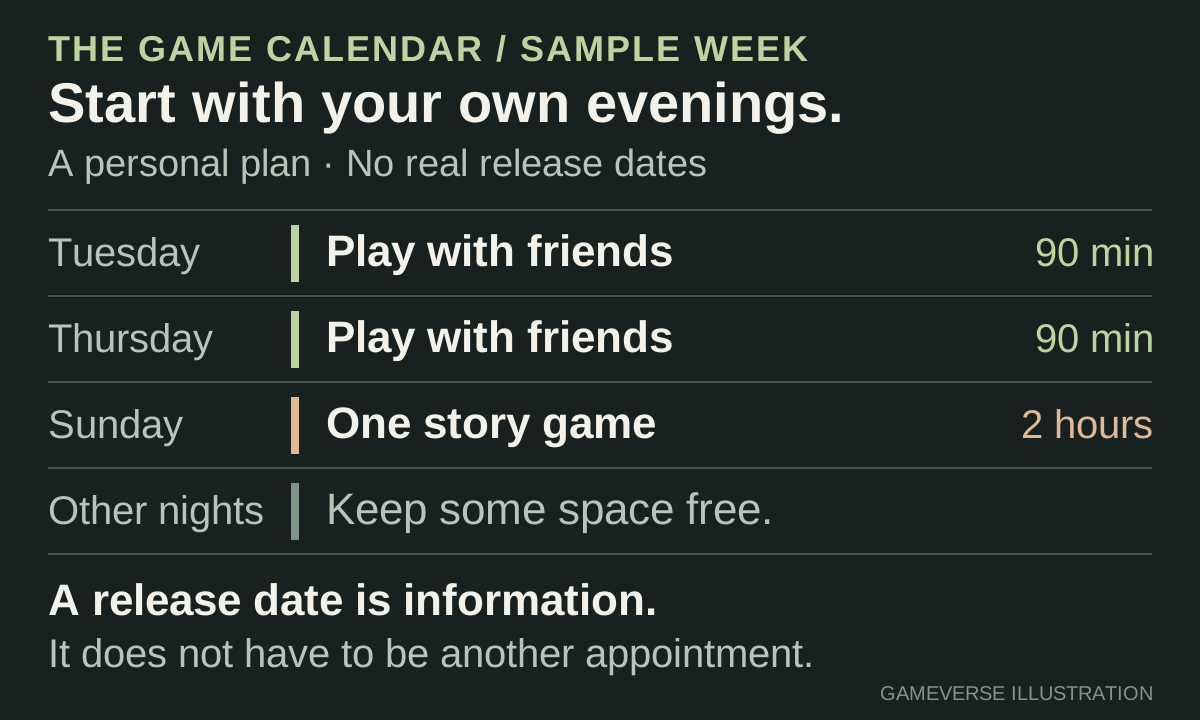
Take an ordinary week, not a holiday week. Perhaps you have two ninety-minute evenings and three hours on Sunday. That gives you six hours before downloads, updates, and the time spent deciding what to play. If a regular night with friends uses one of those evenings, the time available for a new solo game is smaller again.
Write that down before choosing a release. Six hours a week can be plenty for enjoying a substantial game, but it changes the pace. A hypothetical adventure that takes you thirty hours will occupy roughly five weeks at that rate. The calculation is not a promise about any game's length. It is a way to make the consequences of your own schedule concrete.
Keep a little of that time unassigned. Plans are more pleasant when a busy Sunday does not break them. You may also want to replay a mission, explore without progress, or spend an evening trying something with a friend. Those are uses of your gaming time, not scheduling failures.
Give each entry a different job
Use three simple labels: watch, plan, and playing. Watch means you are interested enough to follow a meaningful update. Plan means you have a plausible place for it in your schedule. Playing means it is one of the games currently receiving your attention.
Those labels prevent a wishlist from quietly becoming a queue. You might watch ten games, plan two, and play one substantial solo game alongside a weekly multiplayer session. Moving an entry between labels should be easy. A game can return to watch after a delay, or move into playing because friends have a free weekend and want to start together.
For each planned entry, add one sentence explaining the appeal. “Explore a strange city slowly” is more helpful than “everyone says this will be huge.” “Co-op with Sam and Lee” tells you why the timing matters. A few weeks later, that sentence will explain whether the game still fits what you want.