Baldur's Gate 3: what to check before ending a turn
Read the battlefield, give each companion a clear job, and use movement and limited resources to make the next enemy turn less dangerous.
Read storyTurn-based RPG · released
Build a four-person party, work through turn-based encounters, and make choices that follow you through a Dungeons & Dragons campaign.
GV interest reflects our editorial ordering. Player ratings appear below.
How it plays, who it suits and where to start.
Baldur's Gate 3 is Larian's role-playing campaign in the Forgotten Realms. Your character and their companions face a mind flayer infection, competing interests, and decisions whose consequences can reach beyond the immediate conversation. The familiar fantasy equipment is present, but the distinctive attraction is the breadth of responses a situation allows: talking, sneaking, investigating, or choosing a fight and planning its opening.
In single-player, you direct the party. In multiplayer, other people take control of characters within the same campaign. Both arrangements work better when someone notices the small details: an unexplored path, a companion's concern, a dangerous surface, or a line of dialogue that calls for a different skill.
Combat proceeds in turns, giving you time to examine targets and read ability descriptions. Movement, actions, bonus actions, spell resources, and reactions have different jobs. The challenge is often to combine a few ordinary tools well rather than discover a spectacular build immediately.
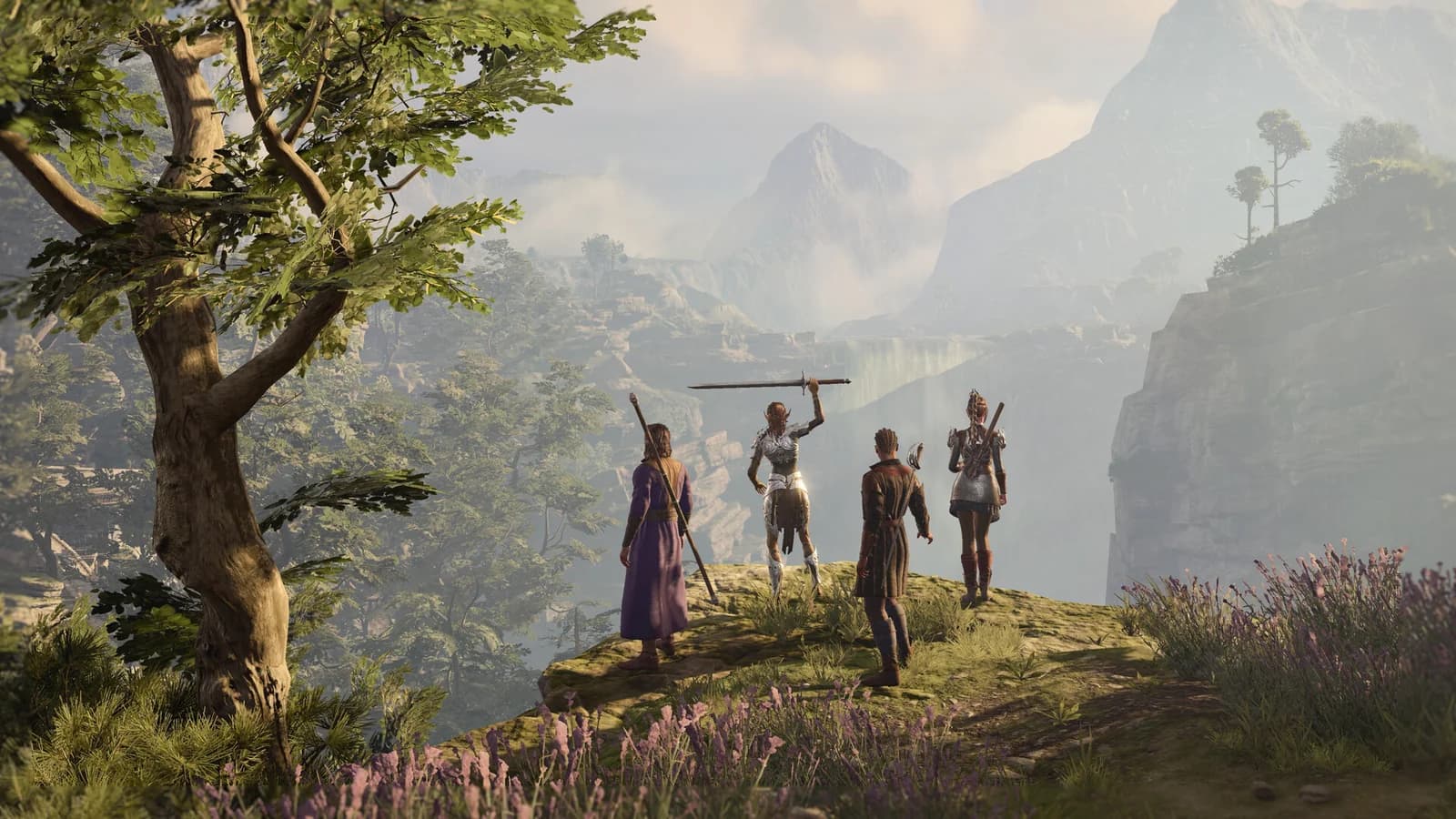
Party composition can help make those tools understandable. Give each character a job you can explain in a sentence, then look for overlap or a missing answer. A ranged attacker needs a clear shot; a fragile caster benefits from space; a melee character needs a realistic route to the target. Positioning matters before damage enters the calculation.
Companions and conversations are substantial parts of the experience. A rushed march from combat to combat can miss the reasons people join you, disagree with you, or ask for help. Read the journal when returning after a break and visit camp regularly instead of treating it solely as a resource screen.
There is no requirement to see every possible outcome in one save. A failed check can create another situation worth playing through, while a manual save gives you room to recover from a mistaken input. Set a difficulty that lets you stay curious about both story and systems. Learning how a turn works is easier when every encounter does not feel like an exam.
Larian's game site and FAQ, full-release announcement, and PlayStation class guide.
1 story about Baldur's Gate 3.
Read the battlefield, give each companion a clear job, and use movement and limited resources to make the next enemy turn less dangerous.
Read storyRead what other players think, or sign in to share your own rating and review.
Sign in to add a rating or review. Other readers can see it on this page.