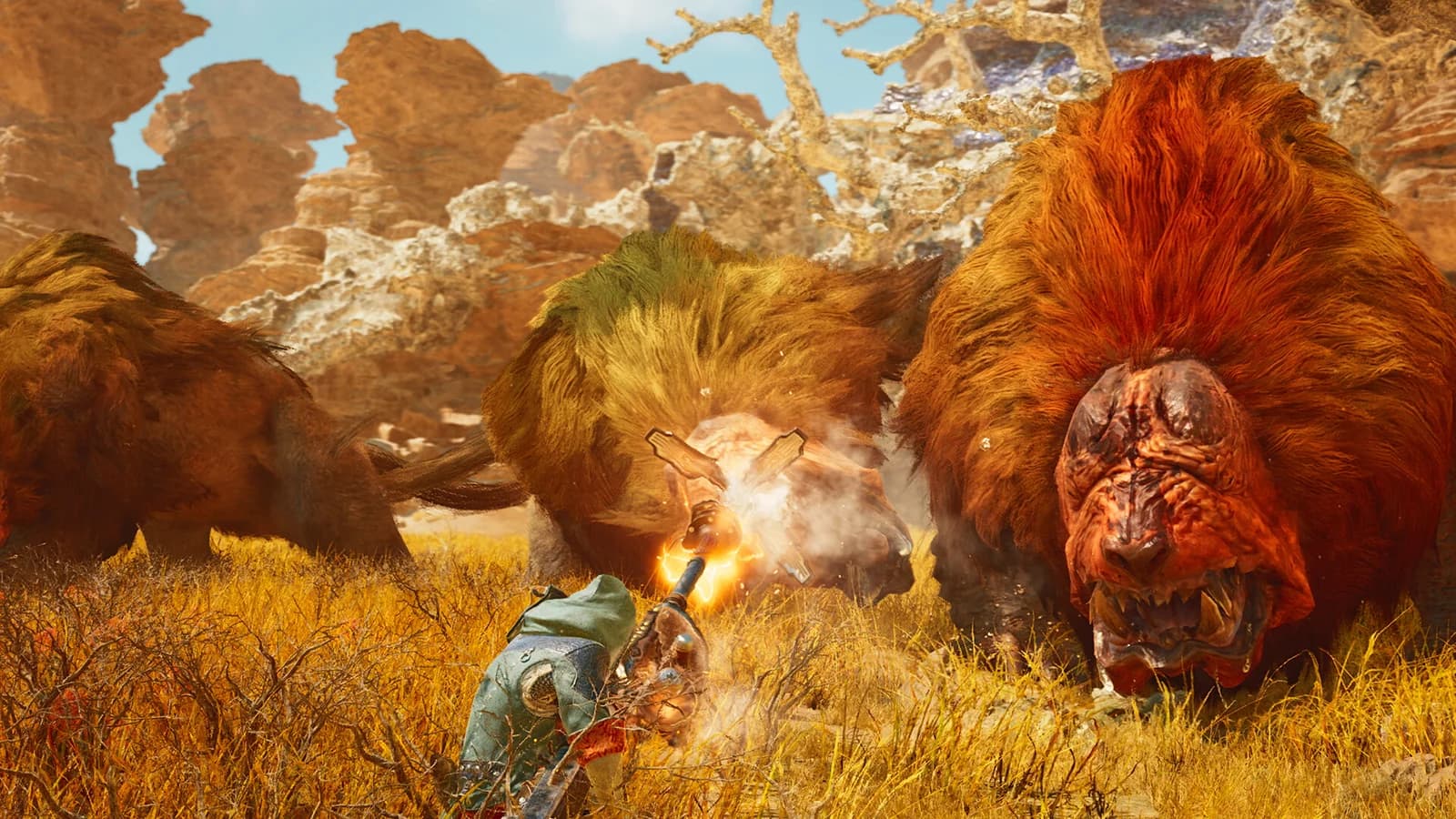
Monster Hunter Wilds: choose a weapon with a real field test
Compare weapons by reach, commitment, defense, and the attention their resources require, then take one familiar plan into a hunt.
Read storyHunting action RPG · released
Prepare at camp, learn a weapon, and hunt across changing environments, turning monster materials into equipment for the next expedition.
GV interest reflects our editorial ordering. Player ratings appear below.
Find players for Monster Hunter Wilds. Filter by region, skill and playstyle, or recruit teammates for your own lobby.
How it plays, who it suits and where to start.
Monster Hunter Wilds sends an expedition into the Forbidden Lands, where the environment and its inhabitants change the conditions of a hunt. Capcom's central loop remains practical: prepare equipment and supplies, track a target, fight it, and use the resulting materials to improve your next loadout. The satisfaction comes from understanding the creature as much as obtaining a new piece of gear.
Preparation can be brief once it becomes familiar. A meal, stocked healing items, and an emergency shortcut are more useful than several minutes of indecision in the equipment menu. The game offers a training area and weapon instructions so that learning a move need not consume an entire quest.
The weapon types have different ranges, defensive tools, and levels of commitment. A heavy attack asks you to identify a long opening; a more mobile style asks different positioning questions. Start by finding a rhythm you can maintain while watching the monster, then add technical combinations when the basic decisions feel comfortable.
Focus Mode helps direct attacks and identify wounds. The Seikret provides transport and carries a second weapon, allowing preparation and adjustment in the field. Neither feature removes the need to judge distance: arriving quickly or seeing a vulnerable part does not guarantee a safe attack.
Wilds supports solo play and online co-op, including cross-platform multiplayer. A group can distribute attention and coordinate opportunities, but personal preparation still matters. Carry the items you need and spend a little time learning how to recover safely instead of assuming other hunters will cover every mistake.
The early story introduces systems gradually. Later equipment decisions become easier if you can identify what repeatedly goes wrong: lost health while sharpening, missed attacks, or a stamina bar empty at the wrong moment. Choose improvements that address that problem before copying a complete endgame set.
A hunting session can have a modest goal. Practice one weapon response, earn materials for one upgrade, or explore a route between camps. That makes repeated hunts useful even when the desired reward does not appear immediately. Check the requirements for your platform and use its available performance settings; other players' PC results cannot predict your own setup.
1 story about Monster Hunter Wilds.
Compare weapons by reach, commitment, defense, and the attention their resources require, then take one familiar plan into a hunt.
Read storyRead what other players think, or sign in to share your own rating and review.
Sign in to add a rating or review. Other readers can see it on this page.